Termite-Damaged Floor System Rebuilt From the Ground Up
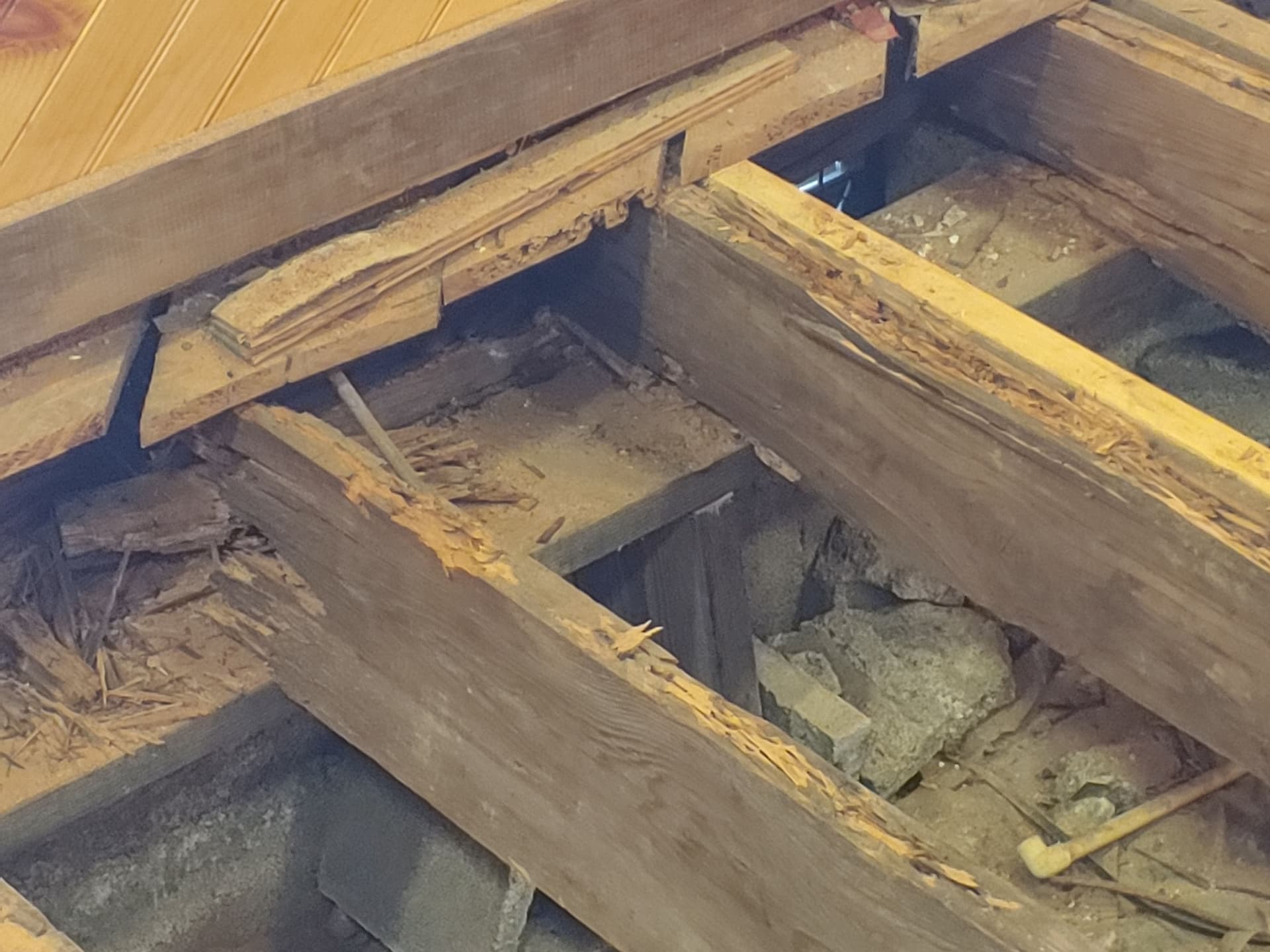
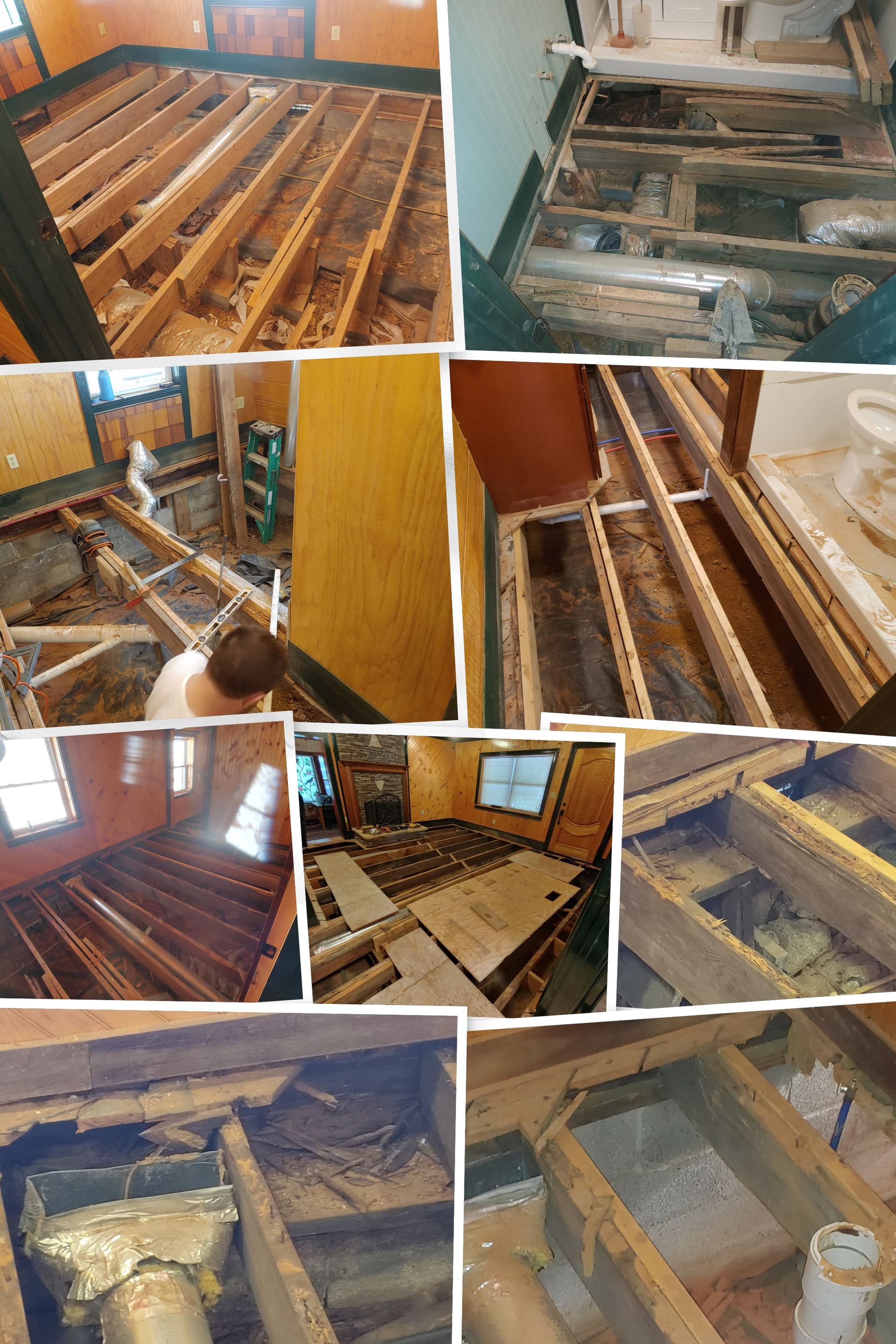
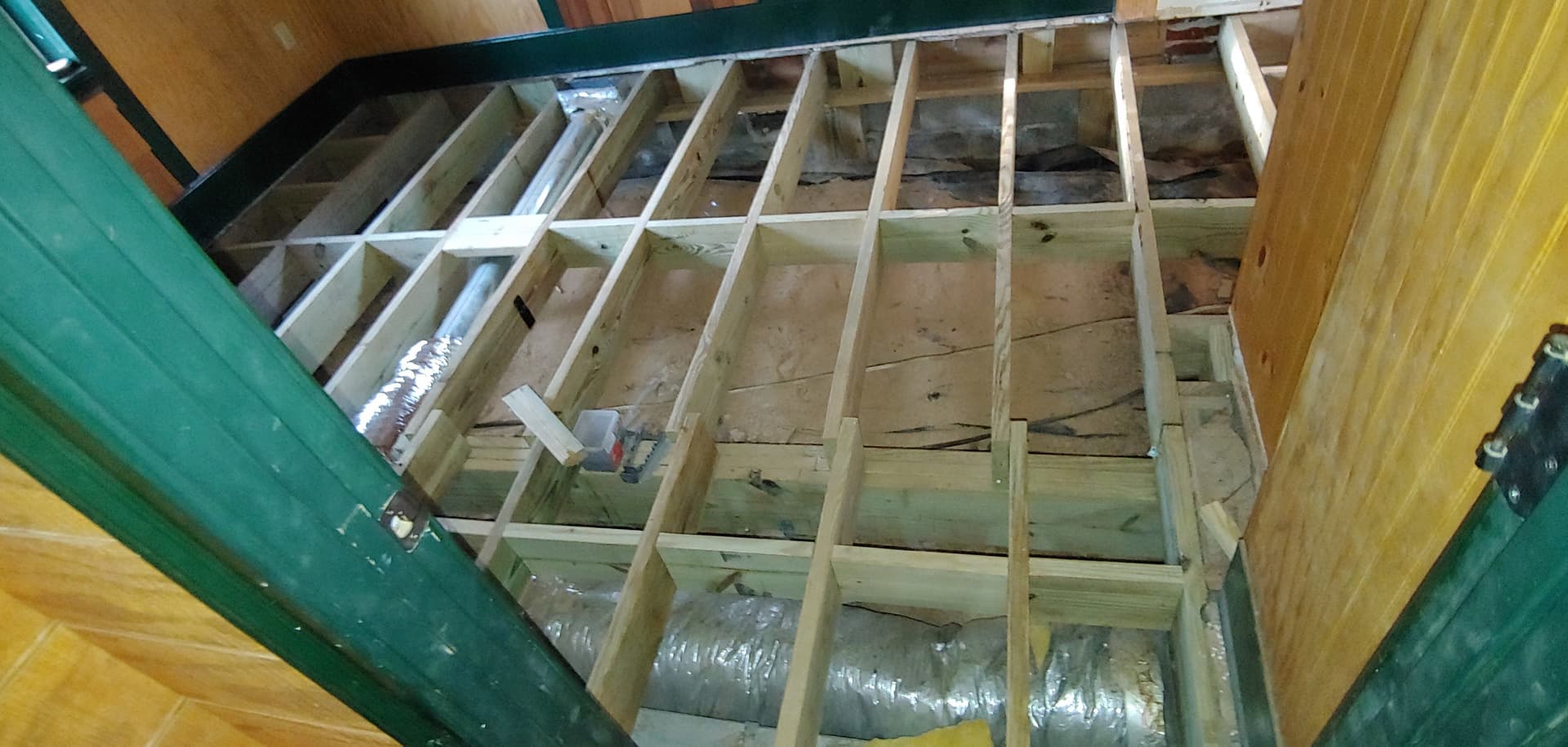
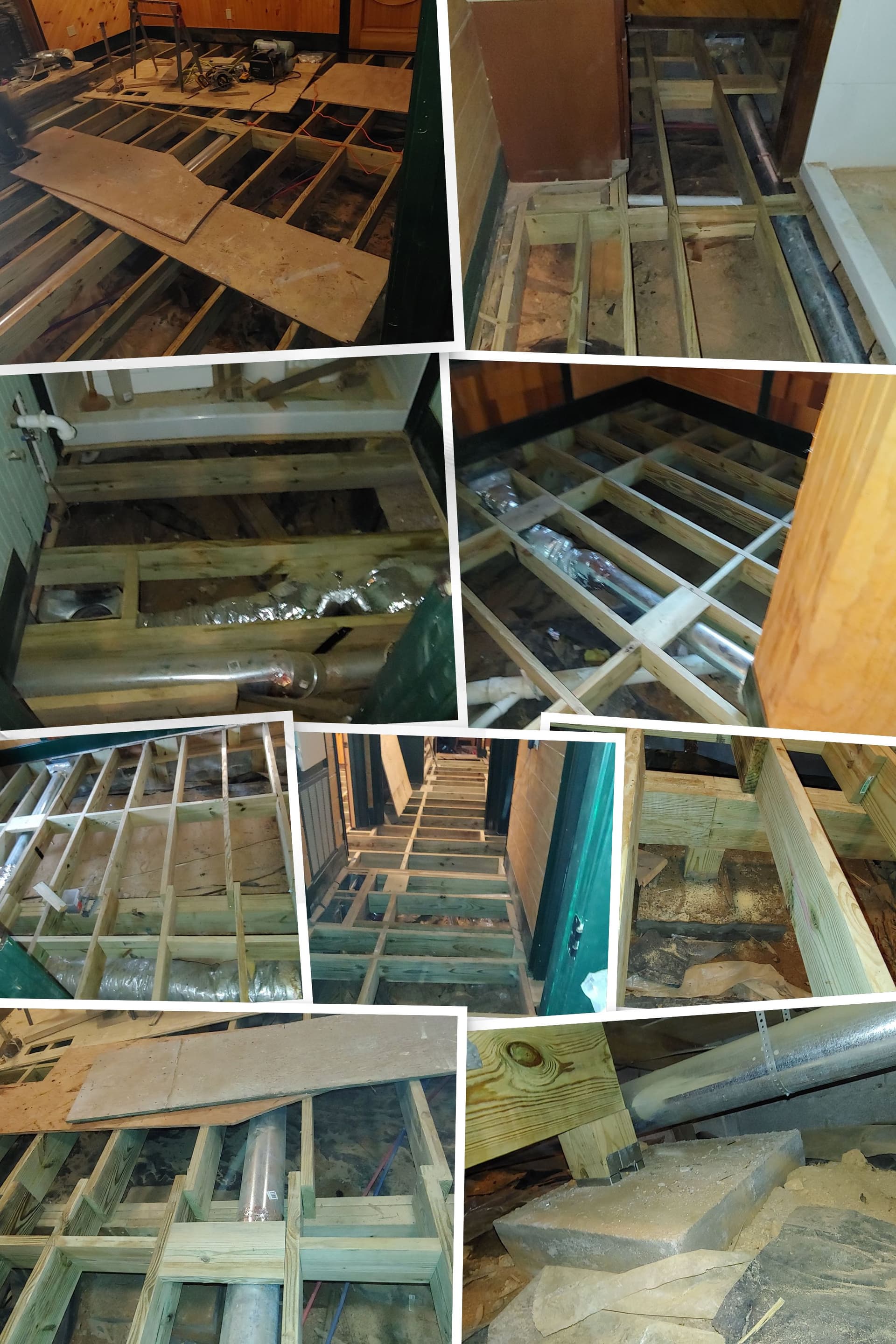
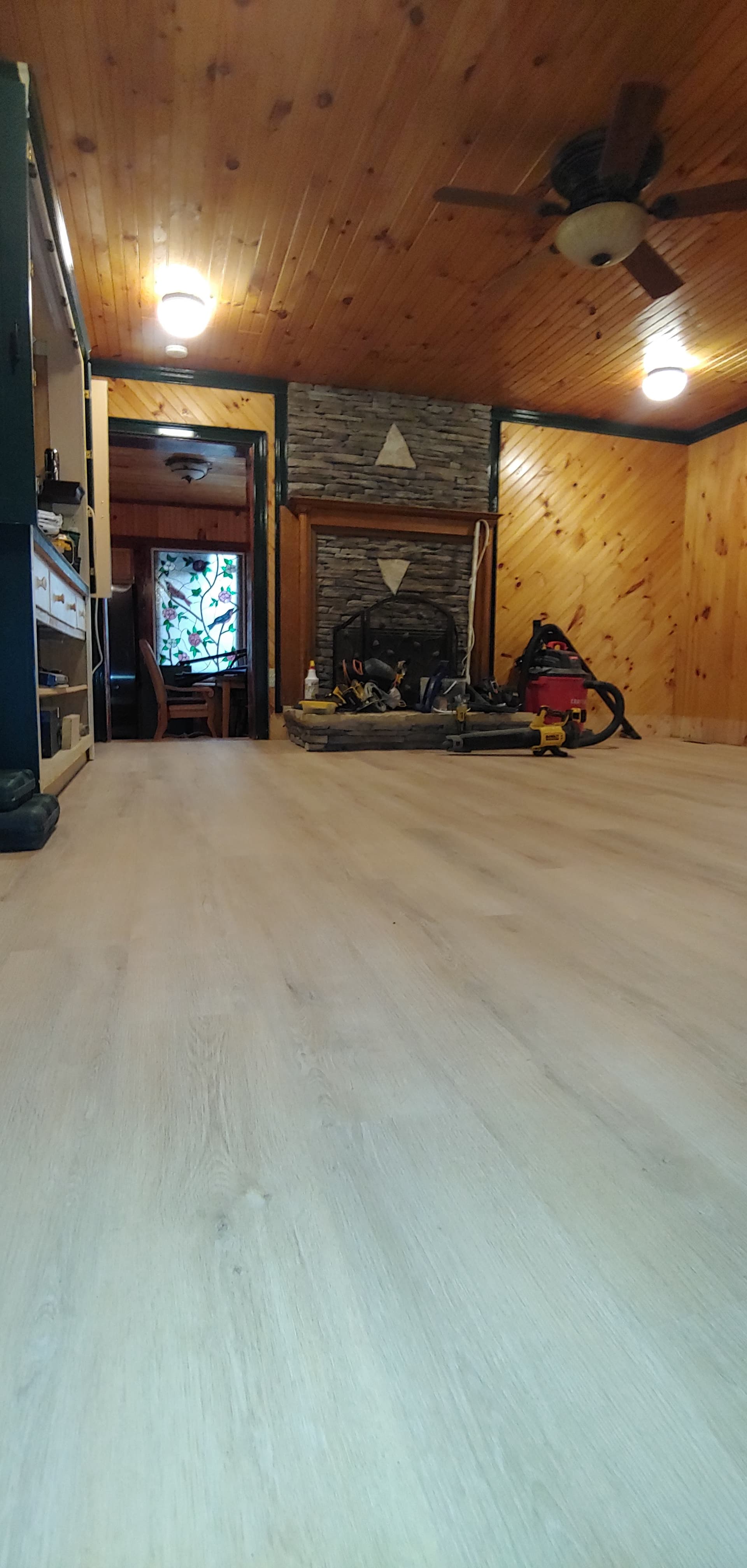
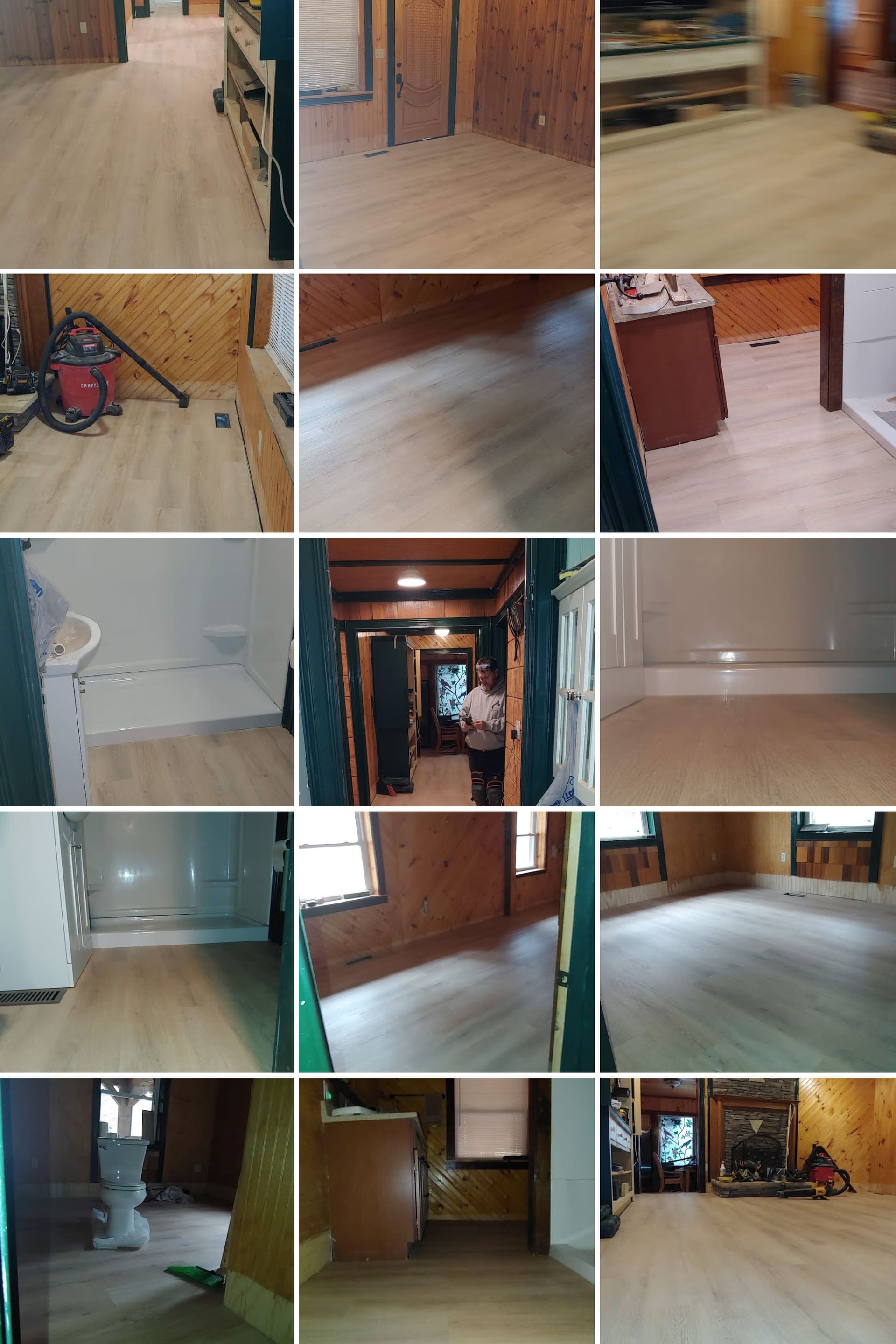
Termite damage is sneaky. By the time you feel a soft spot or notice a bounce in your step, the damage underneath is usually far worse than anyone expects. That was exactly the situation here. The original floor joists were eaten through in multiple areas - structurally compromised to the point where the entire floor system had to come out and be rebuilt from scratch.
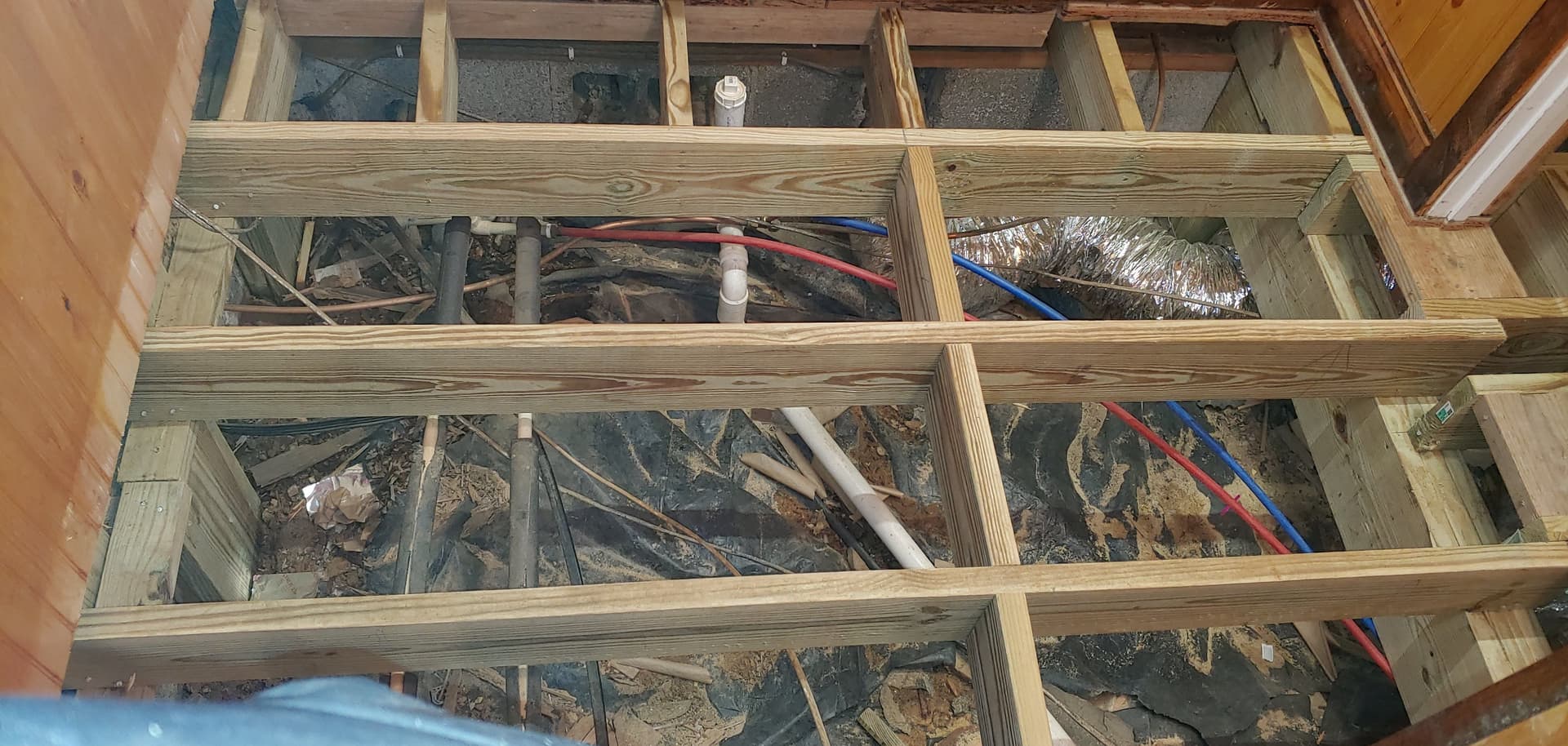
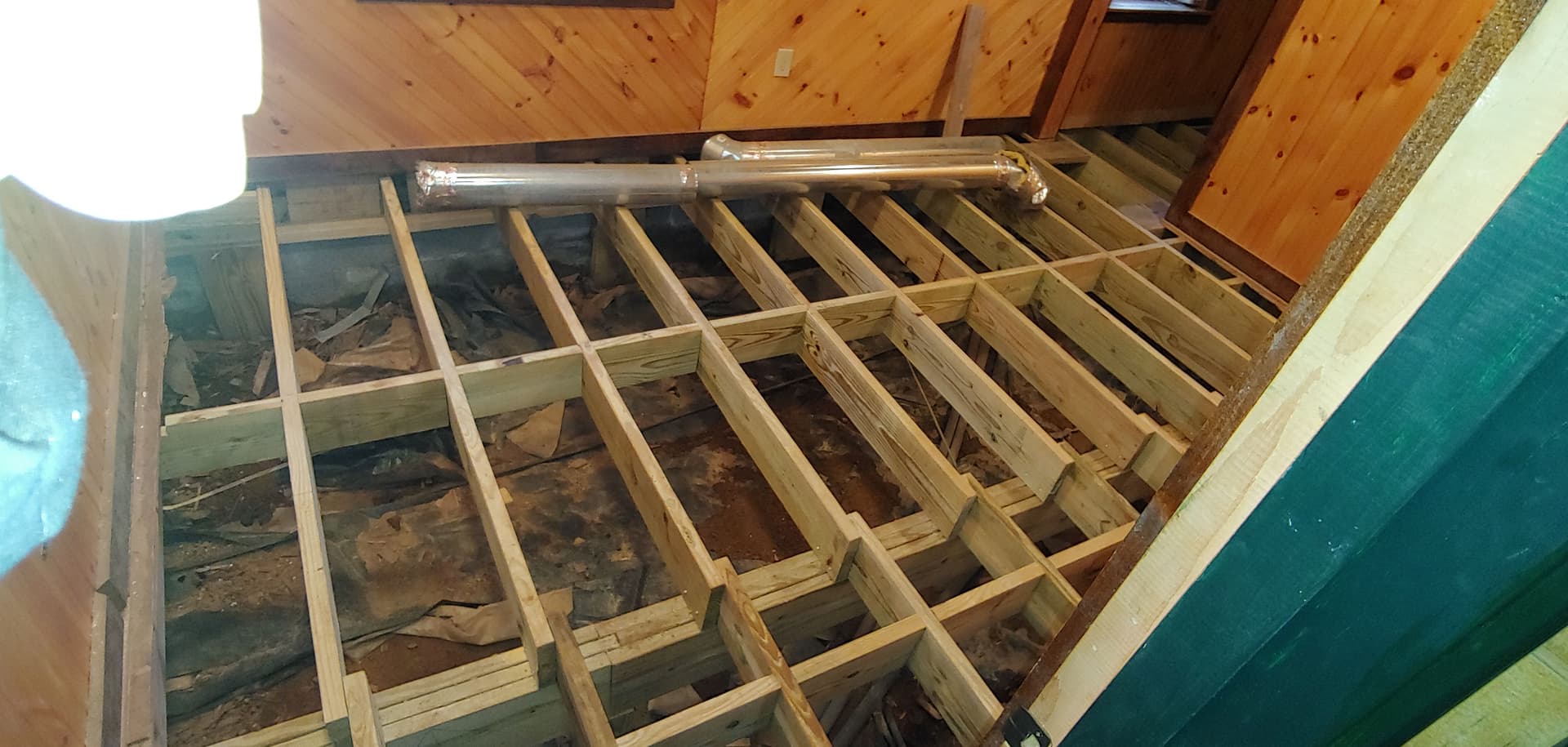
Here's what made this job particularly involved: the walls were still standing. That means we had to lift and level the home, then rebuild the complete floor framing system in place - new joists, new blocking, the whole thing - without tearing the house apart to do it. Every joist bay had to be carefully planned around existing plumbing, HVAC ducts, and utility runs that were still live. That's not a job you can wing. It takes real planning and a crew that knows what they're doing below the surface, not just on top of it.
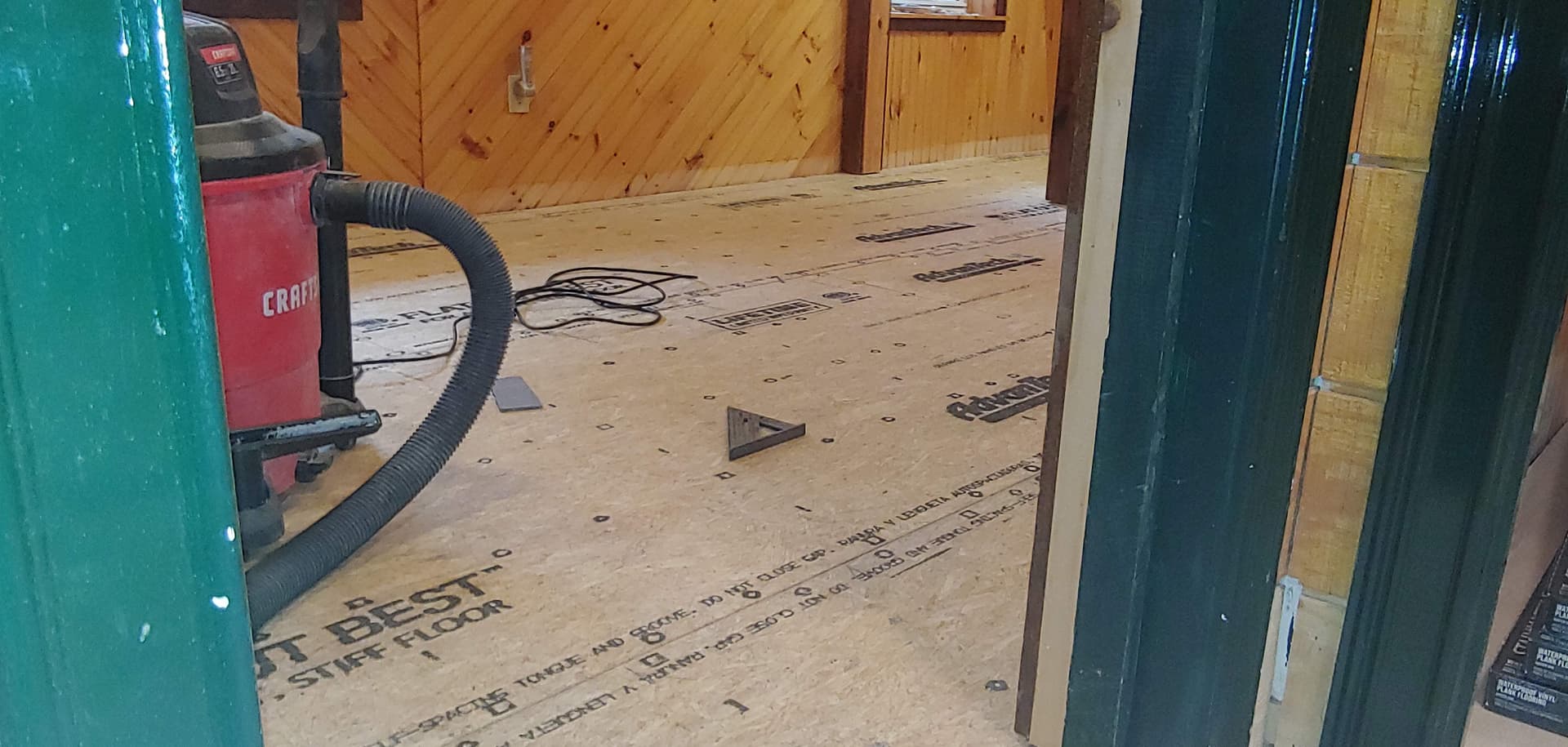
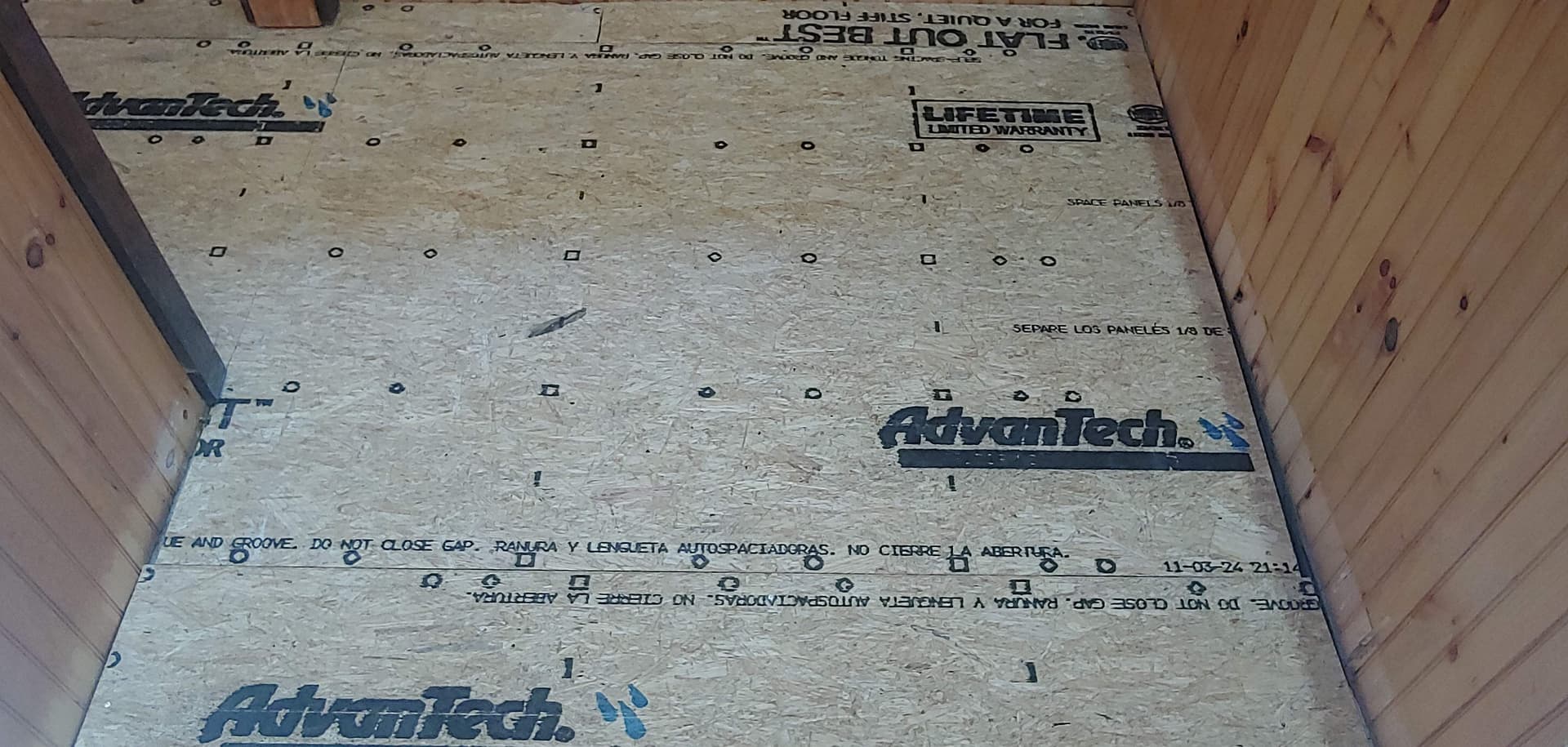
Once the framing was solid and level, we went with a double-layer AdvanTech subfloor. AdvanTech is one of the strongest, most moisture-resistant panels on the market - it carries a lifetime limited warranty and is specifically engineered for stiff, quiet floors. Running it in two layers gives you a rock-solid base that won't flex, squeak, or shift over time. That matters a lot when you're laying vinyl plank on top, because any movement in the subfloor will eventually show up in your finished floor.
On top of that double-layer subfloor, we installed new vinyl plank throughout the home - room to room, hallways, bathrooms, all of it. The finished result is flat, tight, and consistent across the entire house. We also moved every piece of furniture out before the work started and put it all back in place when we were done. That's not a small thing on a job this size, and it matters to the homeowner.
Floors that feel weak, spongy, or uneven don't fix themselves. And in most cases, what you can feel on the surface is only part of the problem. If something feels off when you walk through your home, it's worth getting it looked at before it turns into something bigger.